 EN
EN

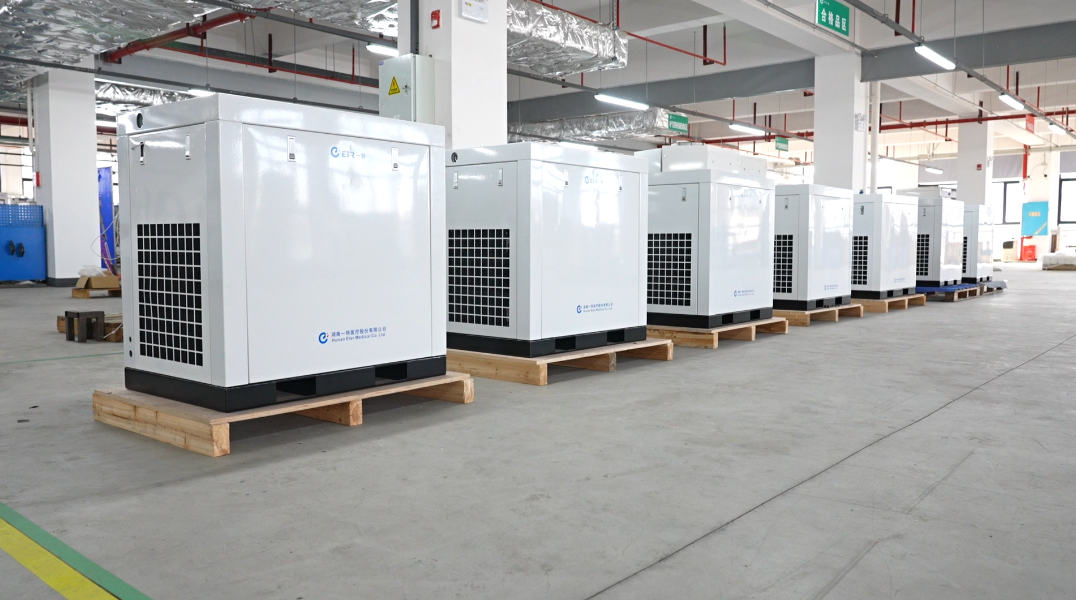
Why Medical Air Compressors Are Critical for Healthcare Infrastructure
Medical air compressors are vital to hospitals and clinics because they supply clean air without contaminants needed for many lifesaving treatments. They run the ventilators in ICU wards, the anesthesia devices in surgery rooms, plus all sorts of breathing equipment used by patients who need extra oxygen. When these compressors break down, it stops important medical work cold. Surgeons might have to pause operations mid-way through, and people struggling to breathe could face serious risks if their machines suddenly stop working properly.
Medical facilities depend heavily on air compressors to keep their operations running smoothly. Standards such as NFPA 99 require hospitals to install oil free models along with backup systems so they don't shut down unexpectedly. When these compressors fail, entire departments come to a halt because patients need continuous oxygen supply, especially newborns in intensive care units who rely completely on compressed air for survival. During the recent global health crisis, many hospitals faced serious challenges when there weren't enough ventilators available, putting extra strain on existing medical gas systems worldwide. For anyone responsible for hospital maintenance, upgrading compressor infrastructure isn't just smart business practice it's absolutely essential if we want to protect lives and ensure good treatment results across all healthcare settings.
Key Technical Specifications and Performance Requirements for Medical Air Compressors
Medical air compressors must meet stringent technical benchmarks to ensure patient safety and operational reliability.
Air Purity Standards (ISO 8573-1 Class 1:4:1 & HTM 02-01 Compliance)
Oil-free compressors are mandatory to eliminate hydrocarbon contamination risks. Compliance requires:
- Particle limits: ≤0.5 microns/m³ (ISO 8573-1 Class 1)
- Moisture control: Dew point ≤−40°F (−40°C) under HTM 02-01
-
Zero oil content: Verified via catalytic sensors
Continuous monitoring systems detect deviations, preventing bacterial growth in pipelines.
Flow Rate, Pressure Stability, and Redundancy Design
NFPA 99 mandates:
- Flow capacity: 55 psig delivery pressure with <5% fluctuation during peak demand
- Redundancy: Dual compressors with automatic switchover for Category 1 life-support systems
-
Uptime assurance: 100% operational continuity for ventilators and anesthesia delivery
Backup power integration ensures uninterrupted function during grid failures.
Regulatory Compliance and Certification Essentials
Medical air compressors must meet stringent regulatory requirements to ensure patient safety and operational reliability. Compliance isn't optional—it's foundational to clinical operations and liability management.
FDA 510(k), CE Marking, and ISO 13485 for Medical Device Manufacturers
Global certifications validate safety and quality systems:
- FDA 510(k): U.S. market clearance demonstrating substantial equivalence to existing devices
- CE Marking: Mandatory for European markets under Medical Device Regulation (MDR)
- ISO 13485: International quality management standard for medical device design and manufacturing
| Certification | Scope | Critical Focus |
|---|---|---|
| FDA 510(k) | U.S. market | Performance equivalence and risk analysis |
| CE Marking | EU/EEA markets | Clinical evaluation and post-market surveillance |
| ISO 13485 | Global supply chains | Documented quality processes and traceability |
HTM 02-01, NFPA 99, and Local Health Authority Requirements
Operational standards address facility-specific risks:
- HTM 02-01: UK technical guidance for medical gas pipeline systems, requiring testing at least every 12 months
- NFPA 99: U.S. fire code mandating backup systems, alarm protocols, and oil-free operation for medical air
- Local regulations: Vary by jurisdiction (e.g., Germany's MPBetreibV requires annual pressure vessel inspections)
Facilities must maintain audit trails demonstrating continuous compliance across all applicable frameworks.
Selecting the Right Medical Air Compressor for Your Facility Type
Facility size, patient volume, and criticality of operations dictate medical air compressor requirements. A one-size-fits-all approach risks operational inefficiency or compliance gaps.
Ambulatory Surgery Centers vs. Large Hospitals: Scalability and Uptime Needs
Ambulatory surgery centers generally handle fewer patients most of the time, with demand coming in waves rather than constant. For these facilities, smaller rotary screw compressors around 10 to 20 cubic feet per minute usually work just fine since they take up less room and don't create so much noise. Big hospitals tell a different story though. Places with intensive care units, operating rooms running all day long, and staff working night and day need much bigger systems, typically over 50 CFM capacity. The bottom line is backup matters a lot here. Most hospital engineers will insist on N+1 setups where there's always an extra unit ready to kick in if something breaks down. When it comes to energy costs, hospitals can save quite a bit too. Variable speed drives help slash electricity bills by roughly 30-35% when demand isn't so high according to Energy Star reports from last year.
Dental Clinics and Veterinary Practices: Compact, Oil-Free Solutions
For smaller medical facilities, space efficiency and clean air are top priorities. That's why oil free compressors have become essential equipment for preventing hydrocarbon contamination risks in sensitive procedures such as dental work or veterinary surgeries where even trace amounts can be problematic. Most installations fall within the 5 CFM range or lower, often featuring built-in drying systems that meet strict ISO standards for air purity down to just 0.01 milligrams per cubic meter of oil particles. The ability to move equipment around makes a big difference when clinics need to rearrange their layout quickly. Keeping noise levels under 60 decibels helps maintain a comfortable environment for patients who might already be feeling anxious in tight examination rooms. These compact systems also require less frequent maintenance overall, which works well for practices with limited staff resources trying to keep operations running smoothly day after day.
FAQ Section
What is the importance of oil-free compressors in healthcare settings?
Oil-free compressors are crucial in healthcare settings because they eliminate the risk of hydrocarbon contamination, ensuring safe and clean air delivery for medical procedures and devices.
Why do medical air compressors require backup systems?
Backup systems are essential for medical air compressors to ensure uninterrupted air supply and reliability in case of equipment failure, especially in critical care environments.
What standards must medical air compressors comply with?
Medical air compressors must comply with standards such as NFPA 99, ISO 8573-1, HTM 02-01, FDA 510(k), and CE Marking to ensure safety, performance, and reliability.

