 EN
EN

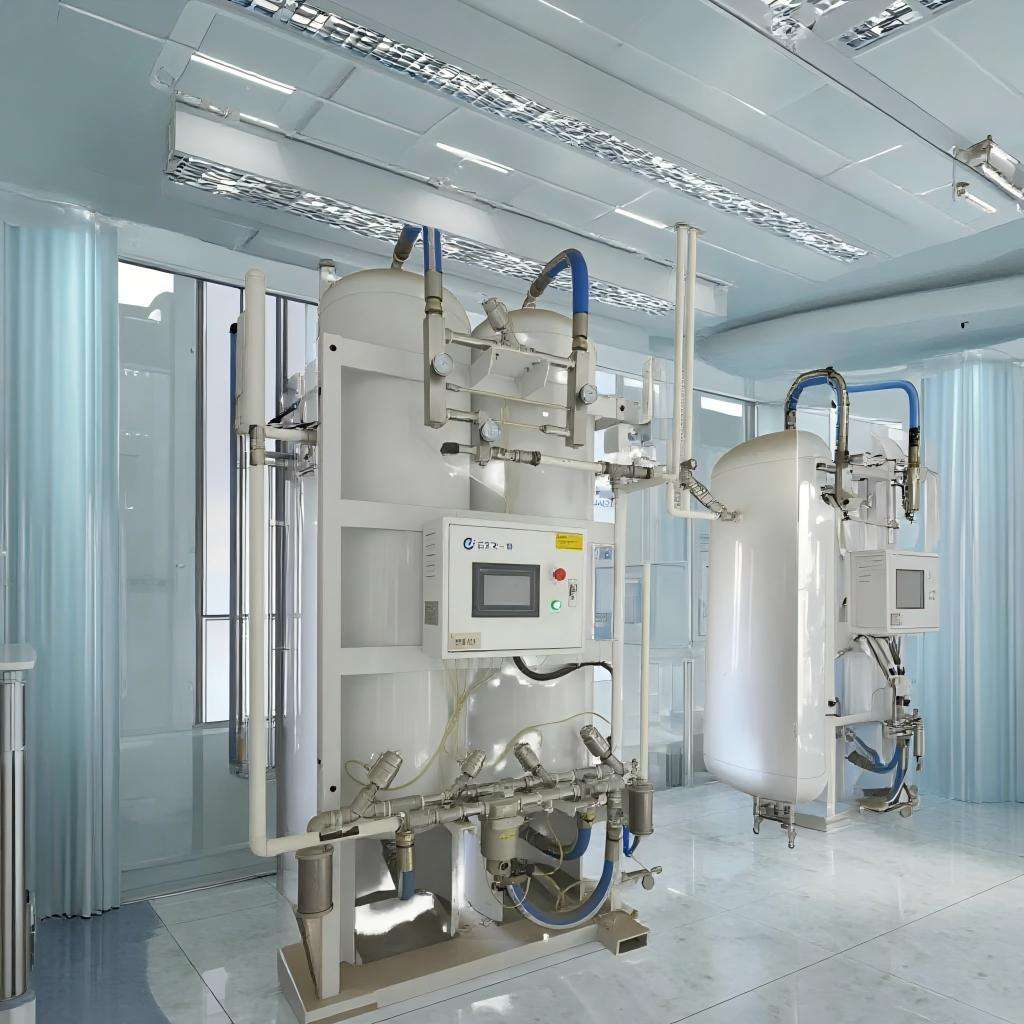
Designing for Stability: Redundancy and Engineering Integrity in PSA Oxygen Making Machines
Redundant Compressors and Dual-Adsorber Systems for Uninterrupted Oxygen Output
PSA (Pressure Swing Adsorption) oxygen making machines achieve operational stability through deliberate redundancy. Dual compressors enable seamless failover—if one fails, the other assumes full load instantly, eliminating production gaps. Similarly, dual-adsorber systems operate in alternating cycles: while one tower produces medical-grade oxygen (>93% purity), the other regenerates by venting nitrogen. Automated controls orchestrate this switching with millisecond precision, maintaining steady flow despite demand fluctuations. Buffer tanks absorb minor pressure variances between cycles, further smoothing output. Hospitals deploying such architectures report 99.8% uptime—essential for life-support applications where even brief interruptions carry clinical risk.
High-Grade Materials and ASME-Certified Pressure Vessels for Long-Term Reliability
Engineering integrity starts with foundational materials. Moisture-laden air paths use 316L stainless steel, offering five times the corrosion resistance of standard grades—critical for sustained purity and longevity. All primary pressure vessels comply with ASME Section VIII Division 1 certification, validated to withstand 150% of maximum allowable working pressure. This margin prevents micro-fracture development that compromises structural integrity and oxygen purity over time. Internally, medical-grade zeolites retain consistent adsorption performance for 60,000–80,000 hours (5–7 years) under proper operating conditions. Facilities using ASME-certified vessels have demonstrated a 37% reduction in maintenance costs compared to non-certified units—confirming that rigorous material and fabrication standards directly translate into lifecycle reliability.
Operational Resilience: Power Management and Preventive Maintenance for PSA Oxygen Making Machines
UPS Integration and Voltage Stabilization Strategies for Continuous Operation
Power continuity is non-negotiable for oxygen supply. Integrating an Uninterruptible Power Supply (UPS) with PSA oxygen making machines bridges grid outages, enabling either safe system shutdown or uninterrupted operation. Voltage stabilizers protect sensitive control electronics from surges and sags—leading causes of premature failure in medical gas equipment. In regions with unstable grids, dual-conversion online UPS systems provide zero-transfer-time power conditioning, eliminating voltage-related disruptions entirely. This layered electrical protection ensures oxygen purity and flow remain unaffected during disturbances—vital for ventilator-dependent patients, for whom even short interruptions can escalate clinical risk.
Zeolite Lifespan-Guided Maintenance: Calibrating Service Intervals to 5–7 Years
Proactive maintenance aligned with actual sieve media degradation—not arbitrary timelines—prevents unexpected yield loss. Zeolite molecular sieves lose 12–15% adsorption efficiency annually due to moisture exposure and trace contaminants. By anchoring service intervals to real-time performance data (e.g., flow consistency, purity drift, pressure differentials), facilities extend functional sieve life to its full 5–7 year potential. Core interventions include:
- Annual valve calibration: Prevents gas bypass that can reduce oxygen yield by 8–10%
- Biennial sieve replacement: Sustains compliance with 93%±2% purity standards
- Real-time moisture monitoring: Triggers desiccant replacement before saturation compromises adsorption
Facilities adopting sensor-guided maintenance report 30% fewer emergency repairs and 22% longer equipment lifespan versus reactive models—optimizing both operational expenditure and clinical supply assurance.
Healthcare Feasibility and ROI of On-Site PSA Oxygen Making Machines
Total Cost of Ownership: PSA Oxygen Making Machine vs. Liquid Oxygen Over 36 Months
Healthcare facilities evaluating oxygen supply options must assess total cost of ownership (TCO) over a realistic multi-year horizon. Comparing on-site PSA oxygen making machines to liquid oxygen (LOX) deliveries across 36 months reveals distinct financial profiles:
- PSA systems require higher upfront investment but rely almost exclusively on electricity, with predictable, low recurring costs tied primarily to scheduled maintenance.
- LOX supply incurs ongoing expenses—including gas purchase, transport logistics, dewar rental, and unavoidable evaporation losses (1–3% daily).
Industry analysis shows PSA systems cut oxygen supply costs by up to 40% relative to LOX within three years (Journal of Healthcare Engineering). This advantage stems from eliminating delivery volatility, price uncertainty, and logistical overhead. A typical 100-bed hospital achieves ROI in 12–24 months and realizes ~$18,000 in monthly savings thereafter—with scalability built in as patient volume increases.
| Cost Factor | PSA Oxygen Making Machine | Liquid Oxygen (LOX) |
|---|---|---|
| Initial Investment | Higher | Lower |
| Monthly Operational Cost | Low (electricity) | High (gas + transport) |
| 3-Year TCO | $210,000 | $350,000 |
Table: Representative 3-year cost comparison for mid-size healthcare facility
Beyond 36 months, the economic divergence widens: PSA maintenance costs stabilize, while LOX expenditures compound annually due to inflation, fuel surcharges, and rising transportation fees. For modern healthcare operations, on-site PSA generation delivers not only clinical resilience but demonstrable, long-term financial sustainability.
FAQs
Q1: What is the primary advantage of PSA oxygen making machines over liquid oxygen?
PSA systems reduce long-term costs, stabilize oxygen supply, and eliminate logistical challenges. They achieve ROI in 12–24 months and significantly lower operational expenses compared to liquid oxygen.
Q2: How does redundancy improve the reliability of PSA oxygen making machines?
Redundancy, such as dual compressors and dual-adsorber systems, ensures continuous oxygen production even during equipment failures by enabling seamless failover.
Q3: Why are ASME-certified pressure vessels important in PSA systems?
ASME-certified vessels enhance safety and durability by meeting high-pressure regulations, reducing the risk of micro-fractures, and extending equipment lifespan.
Q4: How can healthcare facilities optimize the lifespan of zeolite molecular sieves?
Regular maintenance, real-time monitoring, and timely desiccant replacement ensure the zeolite's adsorption efficiency remains optimal throughout its 5–7 year lifespan.
Q5: How does a UPS system benefit PSA oxygen making machines?
A UPS provides uninterrupted power in case of outages or voltage fluctuations, ensuring a stable oxygen supply crucial for critical medical applications.

