 EN
EN

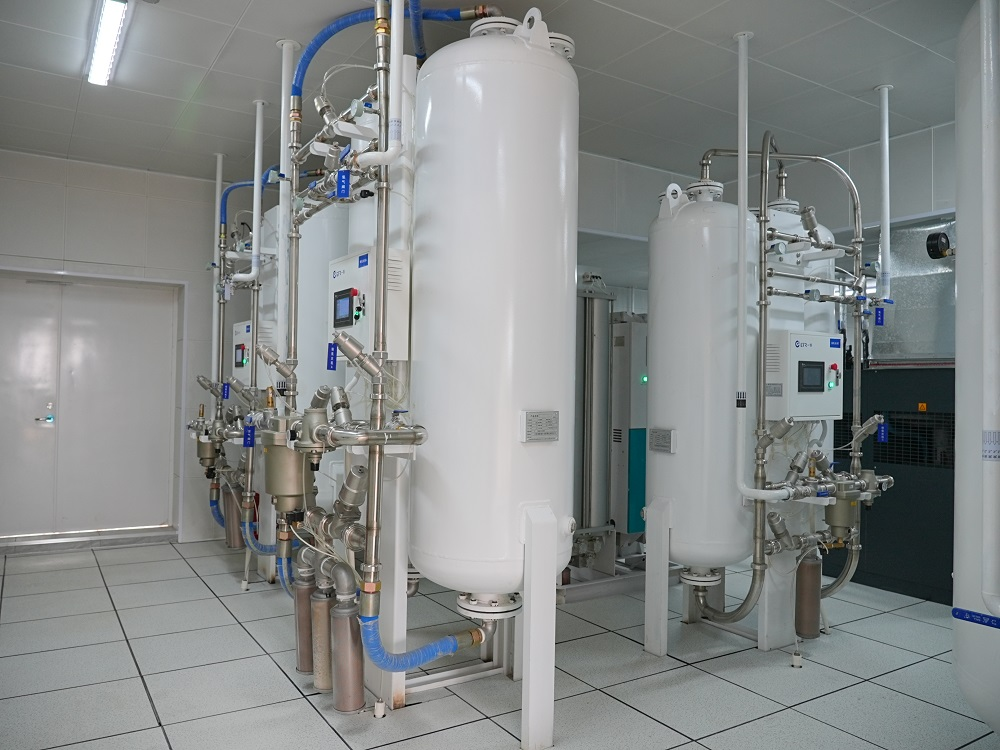
Oxygen Purity and Stability: Clinical Non-Negotiables for ICU Patients
Why 90–96% oxygen purity is essential for ventilator-dependent and critically ill patients
Critically ill patients require 93±3% oxygen purity—the medical standard per international pharmacopeia guidelines—to prevent hypoxemia-induced organ failure. Ventilator-dependent individuals face a 24% higher mortality risk when exposed to sub-90% concentrations due to cerebral hypoxia and myocardial ischemia. For ECMO or hyperbaric therapies, purity below 96% compromises treatment efficacy and increases neurological complications. ICU-grade oxygen generators must maintain this narrow therapeutic window, as fluctuations below 90% during anesthesia can cause respiratory depression and delayed recovery.
Real-time monitoring, drift control, and response to dynamic ICU load fluctuations
Advanced oxygen systems deploy paramagnetic sensors (±0.5% accuracy) that track purity every 0.5 seconds, triggering automatic failover to backup tanks if drift exceeds ±1.5%. These systems respond to ICU demand surges—such as multi-casualty events—by adjusting flow from 500 to 5,000 L/min within seconds. Integrated buffer storage and dual-sieve beds preserve stability during load spikes, while USP <851>-certified materials prevent contamination. This dynamic control prevents purity lapses during ventilator ramp-ups, where even a 15-second interruption risks cerebral damage in stroke patients.
PSA vs. VPSA Oxygen Generator Technologies for ICU-Scale Deployment
When deploying hospital-grade oxygen generators for ICUs, understanding the distinction between Pressure Swing Adsorption (PSA) and Vacuum Pressure Swing Adsorption (VPSA) is critical. Both extract oxygen from ambient air but differ fundamentally in scalability and efficiency for high-demand critical care environments.
Performance comparison: Flow capacity, energy efficiency, and uptime reliability at ≥500 L/min
- Flow Capacity: VPSA systems dominate large-scale deployments (≥500 L/min), leveraging vacuum pumps during regeneration to achieve 95%+ purity at higher volumes—ideal for multi-bed ICUs. PSA units typically cap at 93%±3% purity beyond 300 L/min.
- Energy Efficiency: VPSA reduces energy consumption by ~20% at scale by lowering desorption pressure, whereas PSA requires higher compression energy for equivalent output.
- Uptime: Both technologies achieve >99% reliability with dual-tower designs. VPSA’s lower mechanical stress extends sieve bed lifespan by 15–30% in continuous operations.
Integration readiness: Pipeline compatibility, dew point control, and USP <851> material certification
- Pipeline Compatibility: VPSA’s integrated boosters simplify connection to existing medical gas systems at 50–60 PSI, avoiding external compressors. PSA often requires pressure adjustments for pipeline integration.
- Dew Point Control: Automated drying systems in both technologies maintain dew points below –40°C—preventing moisture-induced bacterial growth in oxygen lines.
- Material Compliance: USP <851> certification ensures all wetted components (valves, piping) meet medical-grade non-toxicity standards. VPSA’s stainless-steel construction typically exceeds corrosion resistance requirements.
Hospitals prioritizing ICU-scale oxygen generation must weigh VPSA’s operational savings against PSA’s simplicity for mid-volume needs, ensuring alignment with dynamic clinical demands.
Safety, Compliance, and Redundancy in Critical-Care Oxygen Generator Systems
Regulatory baseline: FDA 510(k), CE Mark, and USP <851>—what they require (and don’t guarantee)
Medical oxygen generators must meet strict regulatory standards like FDA 510(k) clearance, CE Marking, and USP <851> pharmacopeial guidelines. These certifications validate baseline safety, performance thresholds, and material compatibility. FDA 510(k) confirms substantial equivalence to existing medical devices; CE Marking addresses EU health and environmental requirements; and USP <851> ensures oxygen purity meets pharmaceutical standards through validated testing protocols. However, compliance alone doesn’t guarantee resilience during supply chain disruptions or extreme clinical demand surges. A 2023 Patient Safety Journal study found 70% of ICU oxygen incidents occurred despite regulatory certification—primarily due to inadequate maintenance protocols or component degradation under sustained operation. Operators must supplement compliance with real-time purity monitoring and staff training to address these gaps.
N+1 redundancy, sub-3-second auto-failover, and seamless backup interface protocols
True clinical safety requires engineering redundancy surpassing basic regulations. N+1 configurations provide immediate backup for critical components like compressors and sieve beds, preventing single-point failures from interrupting oxygen flow. Modern systems integrate sub-3-second auto-failover mechanisms that activate upon detecting pressure drops or purity deviations below 90%. These protocols automatically switch to backup generators or buffer tanks holding 30–45 minutes of reserve supply. Crucially, seamless interfaces synchronize with existing hospital pipelines without pressure spikes. Such multilayered protection achieves 99.9% operational uptime—essential for ventilator-dependent patients where uninterrupted oxygen is non-negotiable. Facilities should prioritize these features alongside compliance certifications when selecting ICU-grade oxygen generators.
Right-Sizing Your Oxygen Generator for ICU Bed Capacity and Growth
Accurate sizing of medical oxygen generators prevents operational failures and resource waste in ICUs. Start by calculating base demand using WHO 2022 guidelines of 15–25 L/min per bed, adjusted for department-specific needs:
- ICU beds: 10 L/min average
- General wards: 5 L/min
- ER bays: 8 L/min
- Operating theaters: 15 L/min
Apply a 0.75 diversity factor (for >200 beds) since outlets don’t run concurrently. COVID-19 surge data shows peak demand at 2.5–3× baseline—incorporate this plus a 20% future expansion buffer. Modular systems (e.g., dual 80 Nm³/h units) provide N+1 redundancy while accommodating growth. Always pair generators with 48-hour liquid oxygen (LOX) backup scaled to average demand.
Frequently Asked Questions (FAQ)
Why is 90–96% oxygen purity vital for ICU patients?
ICU patients, especially those who are ventilator-dependent, require 90–96% oxygen purity to prevent adverse effects such as hypoxemia which can lead to organ failure.
What are PSA and VPSA technologies?
PSA and VPSA are technologies used to extract oxygen from ambient air. PSA uses pressure for oxygen extraction while VPSA uses both vacuum and pressure, making VPSA more scalable and efficient for high-demand environments.
What regulatory standards must medical oxygen generators meet?
Medical oxygen generators must comply with standards like FDA 510(k), CE Mark certification, and USP <851> guidelines to ensure safety and efficacy.
How do hospitals ensure the right sizing of oxygen generators?
Hospitals calculate base demand using guidelines, apply diversity factors, incorporate surge data, and plan for future expansion to ensure oxygen generator capacity meets ICU demands.
Table of Contents
- Oxygen Purity and Stability: Clinical Non-Negotiables for ICU Patients
- PSA vs. VPSA Oxygen Generator Technologies for ICU-Scale Deployment
- Safety, Compliance, and Redundancy in Critical-Care Oxygen Generator Systems
- Right-Sizing Your Oxygen Generator for ICU Bed Capacity and Growth
- Frequently Asked Questions (FAQ)

